Life keeps getting better
Two economists at the Federal Reserve Bank of Dallas write a nice summary (in The American magazine) of how much things are improving. They show how, when you take a long view, this is true on just about any dimension you care to measure: availability of products, the real wealth of poor people, amount of leisure time, hours spent doing household chores, etc. etc. Here's my favorite of the 14 easy-to-understand figures in the article:
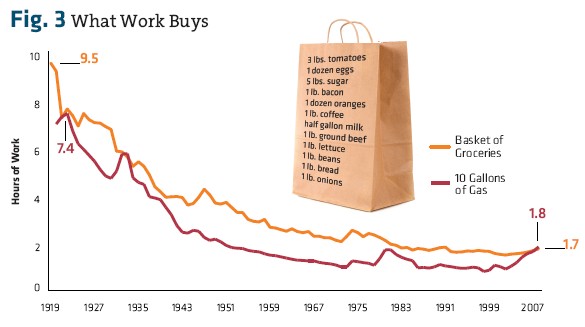
(by the way, the scale on this chart makes it harder to see the real progress of the last ten years, but it's still there. And even though the law of large numbers means the number of hours can no longer drop as precipitously as it did 50 years ago, it's important to remember that an hour of "work" is much, much easier than it was before, thanks to huge improvements in workplace safety comfort, and flexibility--think cellphones and internet)
Even overall spending on healthcare, which has risen over the past decades, is an indicator that people are living longer and wealthier--enough to need to spend money on health.
I think it's more exciting to think about the future and what the world will look like in ten, twenty, or thirty years, when there will be another few doublings of productivity and wealth.